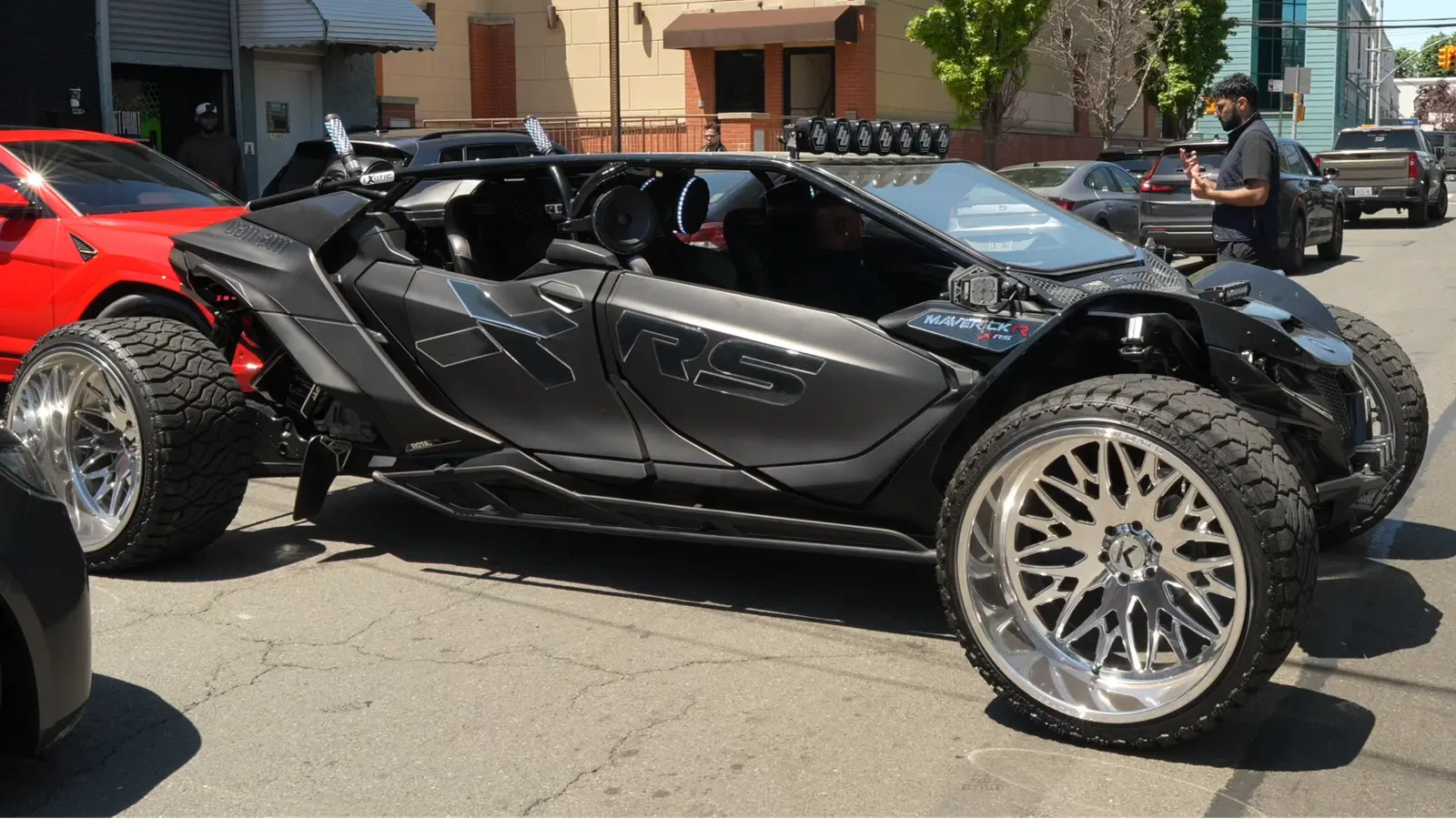
Brand Activations on Wheels: How Event Vehicles Turn Streets Into Stages
Digital ads fight for milliseconds of attention. A wrapped launch vehicle parked outside a SoHo pop-up gets something no feed can sell: people walking over, taking photos, and posting it themselves. That's the entire logic of vehicle-based brand activations — put the brand physically in the world, somewhere unmissable, and let presence do what impressions can't.
Why Vehicle Activations Work
Novelty stops people. Brains filter ordinary; a chrome-wrapped launch car or a branded Airstream at a festival is not ordinary. That pattern-interrupt is the opening ad tech can't buy.
Physical presence implies commitment. A brand that shows up in the real world — that you can touch, photograph, stand next to — reads as more substantial than one that only exists in your feed. It's the difference between being told and being shown.
The audience becomes the media. A photogenic activation vehicle is engineered UGC: every passerby with a phone becomes distribution. The wrap is the ad; the crowd is the ad buy.
It's mobile. Unlike a pop-up shop, the activation drives to where the audience already is - morning at the ferry terminal, afternoon in Washington Square, evening outside the venue. One asset, many stages. (The math on street-level impressions is in our stats breakdown.)
The Formats
- Launch vehicles — a hero car or van wrapped for a product drop, parked where the cameras are. Automotive-adjacent brands especially: the vehicle IS the billboard and the product demo.
- Sampling and street-team vans — branded sprinters that anchor a crew handing out product. The vehicle legitimizes the crew and makes the photo.
- Food truck takeovers — the most beloved activation format in NYC: wrap a truck in the campaign, serve something free, watch the line become the spectacle.
- Mobile tours — one build, many cities. Graphics engineered for repeated load-ins and weather.
- Sponsor and co-brand fleets — event vehicles carrying partner logos, designed with swappable panels so sponsors can change without re-wrapping.
What Separates a Great Activation Vehicle From a Wrapped Van
It's designed for cameras, not traffic. A commercial wrap is designed to be read at 40 mph; an activation wrap is designed to be photographed at 4 feet. Bolder art, tighter details, finishes that reward closeness - satins, chromes, textures.
It's engineered for the run. A campaign vehicle takes a beating: daily load-ins, crowds leaning on panels, weather. Materials and edge-sealing have to survive the full run, then still strike clean.
It's built backward from the live date. Events don't move. Production has to be scheduled in reverse from load-in - artwork lock, proofing on the exact vehicle template, print, install, buffer. This is the discipline most of the industry gets wrong, and the reason we run event work on reserved production slots.
The Timeline That Actually Works
- Lock the date and the vehicle first. Everything else is negotiable; the live date isn't.
- T-minus 2-3 weeks: creative handoff, proofs on vehicle templates, revisions.
- T-minus 1 week: artwork locked, print production begins.
- T-minus 2-3 days: installation - at our Bronx bays or your staging warehouse.
- Live: vehicle rolls out on schedule.
- Strike: wrap removed clean; rented vehicles return to stock.
Compressed version: with approved art, a standard vehicle can go from files to street in 48-72 hours. It's not the plan you want, but it's a plan we can execute.
The Removability Superpower
Activations run on rented and leased vehicles, which makes removable film the quiet hero of the format. Campaign-spec vinyl installs fast, holds for the run, and strips without a trace — so the Sprinter goes back to the rental fleet like nothing happened. At WRP we quote the wrap and the strike as one number; an activation that can't come off cleanly wasn't specced correctly.
For Agencies: What to Look For in a Production Partner
- One roof - design, large-format print, and install in the same facility, because event timelines die in vendor handoffs.
- Proofing on real vehicle templates, so the creative you sold the client survives contact with door handles and body lines.
- White-label discipline - your client, your credit, our silence.
- Honest feasibility calls - a partner who says "that date is impossible" beats one who says yes and misses load-in.
Planning something? Start with the live date and tell us what rolls — we'll build the schedule backward from it.
Frequently Asked Questions
How far in advance should an activation vehicle be booked?
Two to three weeks is comfortable for a single vehicle; multi-vehicle campaigns need more. With approved artwork we've turned vehicles in 48-72 hours - the key is locking the live date first so production slots are reserved.
Can wraps come off rented or leased vehicles after the event?
Yes - short-term activations use removable films specifically rated for clean strike. The vehicle goes back to stock condition, which is why rentals and leases are standard practice in event work.
What does an event wrap cost compared to a permanent wrap?
Often less: campaign films are more economical than long-life cast vinyl and install faster. Every activation is quoted per project — vehicle, coverage, run length — with removal included in the number.
Do you work under agencies white-label?
Routinely. We produce from your creative files, proof on exact vehicle templates, hit your production calendar, and stay invisible on-site. Your client relationship stays yours.