PPF vs. Ceramic Coating: What Each One Actually Does (And Why the Best Answer Is Both)
Walk into any detailing conversation online and you'll find the same argument on loop: PPF or ceramic coating? The framing is the problem — they're not competitors. One is armor, the other is a force field for chemistry and light. This guide breaks down what each genuinely does, where each one wins, what to expect for cost and lifespan, and how the two stack together.
The One-Sentence Difference
PPF physically absorbs damage. Ceramic coating chemically repels contamination. Thickness versus chemistry.
Paint protection film is a ~8-mil urethane layer that takes the hit — rock chips, road rash, scratches, door dings' scuffs — so paint doesn't. A ceramic coating is a liquid polymer (SiO2-based) that cures into a glass-like layer measured in microns — a fraction of a human hair — that bonds to paint and changes how the surface behaves.
What Ceramic Coating Delivers
- Hydrophobics — water beads and sheets off, taking dirt with it. Washing becomes dramatically faster, and the car stays cleaner between washes.
- Chemical resistance — bird droppings, bug splatter, tree sap, road salt, and acidic fallout sit on the coating instead of etching the clear coat. In a NYC winter, this is real protection.
- UV protection — blocks the slow oxidation that fades and dulls paint over years of street parking.
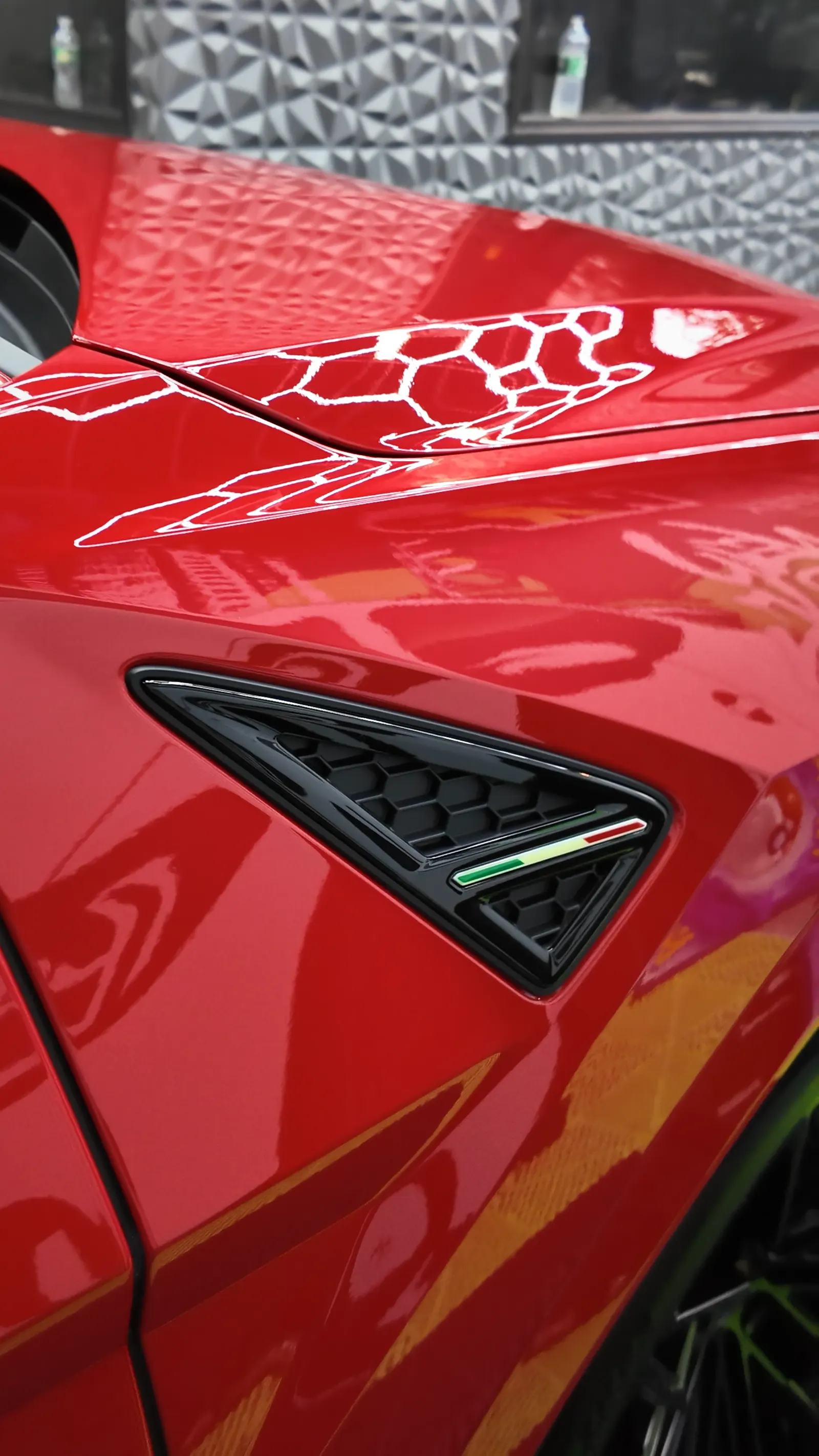
- Gloss depth — a properly prepped and coated car has that wet, mirror look that no spray wax replicates. This is the finish you see on our ceramic coating page — built on corrected paint.
What it does not do: stop rock chips, prevent dents, or fix existing swirls. A coating locks in the condition of the paint under it — which is why correction comes first, every time.
What PPF Delivers
- Impact absorption — the only product that prevents rock chips and road rash. Physics needs thickness.
- Self-healing — light swirls and scratches in the film disappear with heat.
- Sacrificial protection — the film takes the damage, then gets replaced years later; original paint stays untouched underneath.
- Preserved originality — factory paint intact at resale, verifiable with a paint meter.
What it does not do as well as ceramic: PPF alone isn't especially slick or hydrophobic, and it can hold water spots without a coating over it. (Full breakdown in our PPF deep-dive.)
Head to Head
| PPF | Ceramic Coating | |
|---|---|---|
| Rock chips & impact | Yes - its whole purpose | No |
| Swirl/wash-marring defense | Yes + self-healing | Partial (hardness helps, doesn't heal) |
| Chemical etching (bird bombs, salt) | Very good — the film is sacrificial, and STEK's top coat resists staining | Excellent |
| UV / oxidation | Good | Excellent |
| Gloss & slickness | Neutral-gloss | The signature deep wet look |
| Easier washing | Good — STEK films carry a hydrophobic top coat | Major benefit |
| Lifespan | 7-10 years | 3-7 years |
Setting Honest Expectations
If you ceramic coat only: expect stunning gloss, faster washes, strong chemical/UV defense — and accept that a highway pebble will still chip the paint. The coating also needs decent wash habits; automatic brush car washes will abrade any coating over time.
If you PPF only: expect genuine armor on covered panels and paint that's factory-perfect underneath for years — but the film will need washing like paint does, and uncovered panels remain exposed.
Neither product is "install and never think about the car again." Both reward basic care: hand washes or touchless, prompt removal of bird droppings, and an occasional maintenance detail.
The Layered Strategy (What We Actually Recommend)
The builds that stay flawless in New York run both, by zone:
- Full-front PPF on the impact zone — bumper, hood, fenders, mirrors
- Ceramic coating over everything — including on top of the film
The ceramic layer makes the PPF hydrophobic and stain-resistant while the film handles impacts; the rest of the car gets the gloss, the easy washing, and the chemical defense. Armor where the car gets hit, chemistry everywhere. That's the whole answer.
Decision Guide
- Daily highway miles? Start with front-end PPF. Add ceramic when budget allows.
- Show car, weekend car, garage queen? Correction + ceramic first; add PPF if it sees road trips.
- Brand-new delivery you plan to keep? Both, immediately, while the paint is perfect.
- Lease? Front PPF protects against turn-in charges; skip long-horizon ceramic tiers.
Not sure which zone matters most for how you drive? Talk to us — we'll spec it against your actual parking, commute, and plans for the car, not a package chart.
Frequently Asked Questions
Can you put ceramic coating on top of PPF?
Yes - and it's the premium play. The ceramic layer adds hydrophobics and chemical resistance to the film, keeps it cleaner, and makes washing easier. Modern films are ceramic-compatible; we coat over PPF regularly.
Which lasts longer, PPF or ceramic?
Quality PPF is warrantied around 10 years. Professional-grade ceramic coatings typically last 3-7 years depending on the product tier and how the car is washed and stored. Both far outlast waxes and sealants.
If I can only afford one, which should I pick?
Decide by your main enemy. Highway miles and rock chips: PPF on the front end. Garage-kept car where gloss, easy washing, and UV protection matter most: ceramic. Many clients start with front-end PPF plus ceramic everywhere else.
Does ceramic coating prevent rock chips?
No. A coating is measured in microns - far too thin to absorb impact. Anyone who tells you ceramic stops rock chips is selling, not explaining. Chip protection requires film thickness, which is PPF's job.