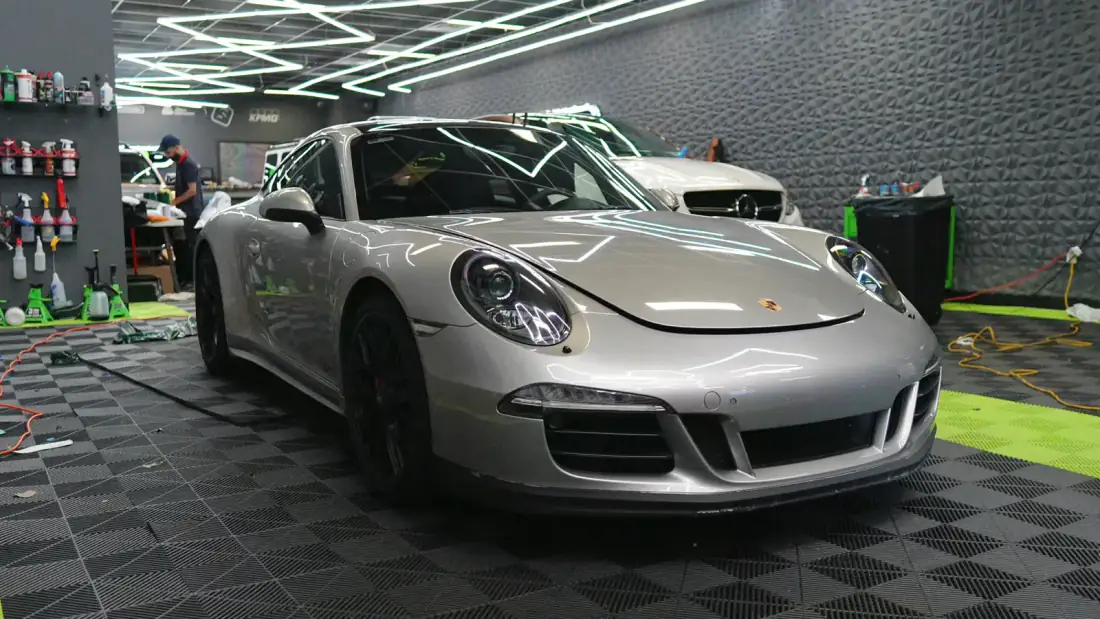
Why Paint Protection Film Is the Smartest Money You'll Spend on Your Car
Every mile you drive, your paint is under attack. Rock chips at highway speed hit like sandblasting. Road salt eats at every chip through the winter. Sun bakes the clear coat all summer. And in New York, add tight parking, careless door swings, and the occasional shopping cart with a grudge.
Paint protection film — PPF — exists because repainting is worse. This guide covers what the film actually is, what it does that nothing else can, what it costs against the alternative, and who genuinely needs it (not everyone does).
What PPF Actually Is
PPF is an optically clear thermoplastic polyurethane film, typically around 8 mils (0.2mm) thick — roughly four times thicker than a vinyl wrap. It was developed from military technology used to protect helicopter rotor blades, and the automotive version keeps three working layers:
- A clear coat layer with self-healing polymers — light swirls and scratches literally disappear with heat from the sun or warm water.
- The urethane core — the thick, elastic layer that absorbs impacts that would chip paint.
- Pressure-sensitive adhesive — engineered to bond for years, then release cleanly without harming factory paint.
Premium films from STEK — what we install at WRP — carry 10-year warranties against yellowing, cracking, and peeling.
What It Does That Nothing Else Can
Ceramic coatings resist chemicals and make washing easier. Wax adds gloss for a few weeks. But neither does anything meaningful against a pebble at 60 mph — that's pure physics, and physics needs thickness. PPF is the only product that absorbs impact energy before it reaches paint.
Think of it this way: ceramic coating is sunscreen. PPF is armor. They solve different problems — which is why serious builds get both.
The self-healing layer matters more than people expect in the city. Brush against a hedge, drag a jacket zipper across the fender, run a dusty sleeve over the hood — on bare paint those become permanent swirls. On PPF, they vanish in the afternoon sun.
The Math: PPF vs. Repainting
Here's the comparison that settles most decisions:
| Scenario | What you're paying for |
|---|---|
| PPF coverage | One-time install that protects for up to a decade — then removes clean |
| Respray after damage | Recurring: chips come back, the color match is never factory, and the car loses its original paint |
A respray isn't just money — it costs the car its original factory paint, which matters at resale and shows on paint-meter checks that any serious buyer or dealer will run. PPF preserves originality; a respray erases it.
Who Actually Needs It
Highway commuters — daily miles on the Deegan, Cross Bronx, or I-95 mean daily rock-chip exposure. Full-front coverage pays for itself here fastest.
New car buyers — the best day to install PPF is before the first chip. Film over flawless paint locks in day-one condition.
Lease drivers — chips and scratches show up as excess-wear charges at turn-in. Film prevents the charges and removes cleanly.
Enthusiast and luxury owners — when the paint is part of the car's value, protecting it is maintenance, not vanity. This is why nearly every high-end delivery we see goes straight to full-front or full-body coverage.
Who can skip it? A ten-year-old daily with faded paint won't return the investment — put that budget toward paint correction and ceramic instead, and enjoy the shine.
Coverage Levels, Explained Simply
- Front bumper — the minimum. The single most-hit panel on any car.
- Full front — bumper, full hood, fenders, mirrors. The sweet spot for most drivers.
- Track package — full front plus rocker panels and A-pillars for spirited driving.
- Full body — every painted panel. Maximum protection, showroom-forever finish.
Explore each level on our PPF page — the interactive coverage tool shows exactly what each package protects.
Why Installation Quality Decides Everything
PPF is unforgiving of shortcuts. A great install is invisible — edges wrapped, seams hidden, zero dust or bubbles. A bad one shows lifted corners, trapped debris, and visible lines within months. What separates them:
- Plotter-cut patterns for your exact vehicle, so no blades ever touch your paint
- A controlled, dust-managed install bay — not a driveway
- Decontaminated, corrected paint underneath — film locks in whatever is under it, including swirls if they're not polished out first
That last point is why our PPF installs start with proper prep and decontamination — the film should seal perfection in, not seal flaws under.
The Bottom Line
PPF is the only product that physically prevents the most common, most expensive kind of paint damage. It's invisible, it heals itself, it protects resale value, and modern films last a decade. If you keep your car nice — or want your next one to stay that way — it's the first protection to buy, not the last.
Frequently Asked Questions
Is PPF worth it on a lease?
Usually yes, if you keep the car 2-3 years. Lease-end inspections charge for rock chips and scratches; PPF prevents exactly those charges, and it removes cleanly at turn-in. On luxury leases, one avoided bumper respray often covers the film.
How long does PPF last?
Quality films (STEK) are warrantied for 10 years against yellowing, cracking, and delamination. In real NYC conditions expect 7-10 years of protection with normal care.
Can PPF be removed without damaging paint?
Yes - professionally removed PPF comes off factory paint cleanly. That's the point: the film takes the damage and gets replaced; the paint underneath stays perfect and original.
What's the difference between PPF and a vinyl wrap?
PPF is a thick, clear, self-healing urethane built for impact protection; vinyl wrap is a thinner colored film built for looks. Wraps offer light protection, but they don't absorb rock chips the way PPF does. Color PPF now blends both worlds.