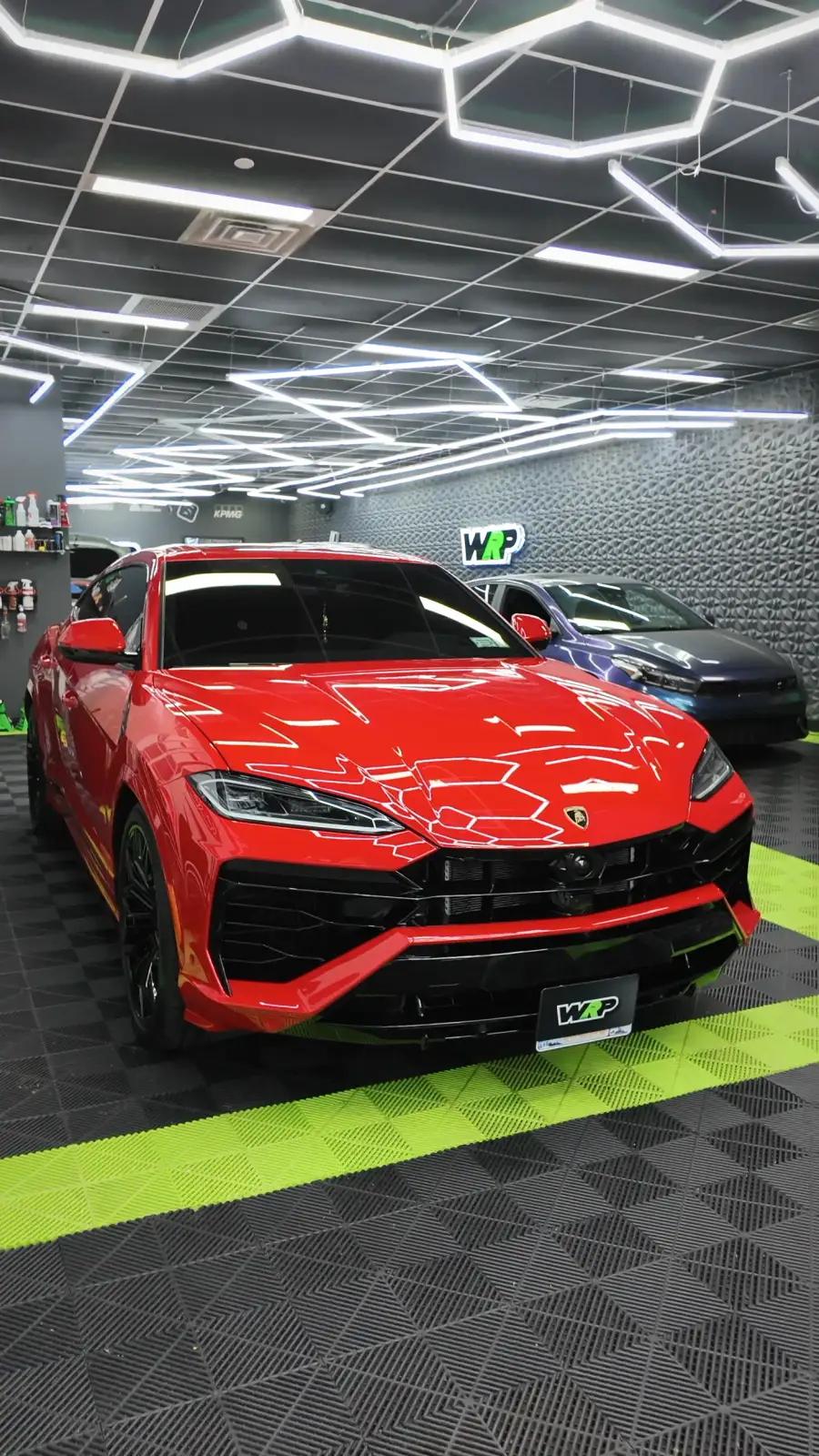
The Wet Look That Lasts for Years, Not Weeks.
Glass-hard ceramic protection — hydrophobic, UV-proof, chemical-resistant, and glossier than the day it left the factory.
A ceramic coating is a liquid polymer that cures into a glass-like sacrificial layer bonded to your clear coat. From that day on, the coating faces the world so your paint doesn't: water beads and sheets off, road salt and bird droppings sit on the coating instead of etching the finish, UV stops baking the color out, and washing takes half the time because grime can't grip.
And then there's the reason people really buy it — the gloss. That deep, wet, mirror look on the Urus isn't a filter; it's corrected paint under cured ceramic.
What it won't do: stop rock chips. Coatings are chemistry, not armor — for impact protection see PPF, and for the full comparison read PPF vs. ceramic.
What a Coating Actually Does
Four Years of Easier Ownership
Hydrophobic
Water beads and carries dirt off with it - the car stays cleaner between washes, and washes go faster.
Chemical Defense
Bird droppings, sap, road salt, and acid rain etch the coating's surface energy, not your clear coat.
UV Shield
Blocks the slow oxidation that fades street-parked paint - critical for NYC cars that live outside.
Locked-In Gloss
The corrected finish underneath stays sealed at its best - the wet look survives the seasons.
What Actually Happens on Your Paint
A professional ceramic coating is a resin rich in SiO2 (silicon dioxide) — liquid glass, functionally. Applied to corrected clear coat, it doesn't sit on the paint the way wax does — it cross-links as it cures, hardening into a semi-permanent film that bonds tenaciously to the finish. Wax washes off in weeks; a cured coating can only be removed by abrasion.
As it cures, the coating creates an extremely low surface-energy finish. That's the mechanism behind everything you see: water can't grip, so it beads at a high contact angle and rolls off carrying dirt (the self-cleaning effect). Contaminants — salt, bird acids, industrial fallout — chemically attack this sacrificial glass layer instead of your clear coat. And the cured film tests at the top of the pencil-hardness scale (the “9H” you see quoted industry-wide), resisting the micro-marring that dulls unprotected paint with every wash.
What chemistry can't do: absorb impacts. A coating is microns thick; a rock chip needs PPF's mils of urethane. Different physics, different products — which is why the premium stack uses both.
Gtechniq & Gyeon — Three Protection Tiers
We install coatings from Gtechniq and Gyeon — two of the most respected chemistry houses in the industry — in three duration tiers, matched to how you own the car:
The Daily Tier
A single-layer professional coating - full hydrophobics, UV and chemical defense sized to a lease term or a car you'll trade within a few years.
The Owner's Tier
Multi-layer application with greater film density - the sweet spot for keepers: deeper gloss, tougher chemical resistance, and a maintenance-friendly service interval.
The Flagship Tier
Top-line Gtechniq and Gyeon systems, layered and cured to spec - maximum thickness, maximum durability, for the car you intend to keep looking new indefinitely.
Every tier is installed over paint corrected to what your finish needs, and quoted free per vehicle - get yours.
Yes — Matte Needs Coating Most of All
Matte and satin finishes — factory paint, wraps, or matte PPF — have a hard rule: you can never polish them. Polishing adds gloss, and gloss ruins matte. So any stain, etch, or water spot a matte finish picks up is effectively permanent.
That's why we install dedicated matte coatings from the Gtechniq and Gyeon matte lines: they bond the same protective SiO2 chemistry without altering the sheen — the finish stays perfectly flat while gaining the hydrophobics and chemical armor that make matte livable in New York.
If you own a matte wrap or satin PPF, this is the least optional coating we offer.
Correction Comes First
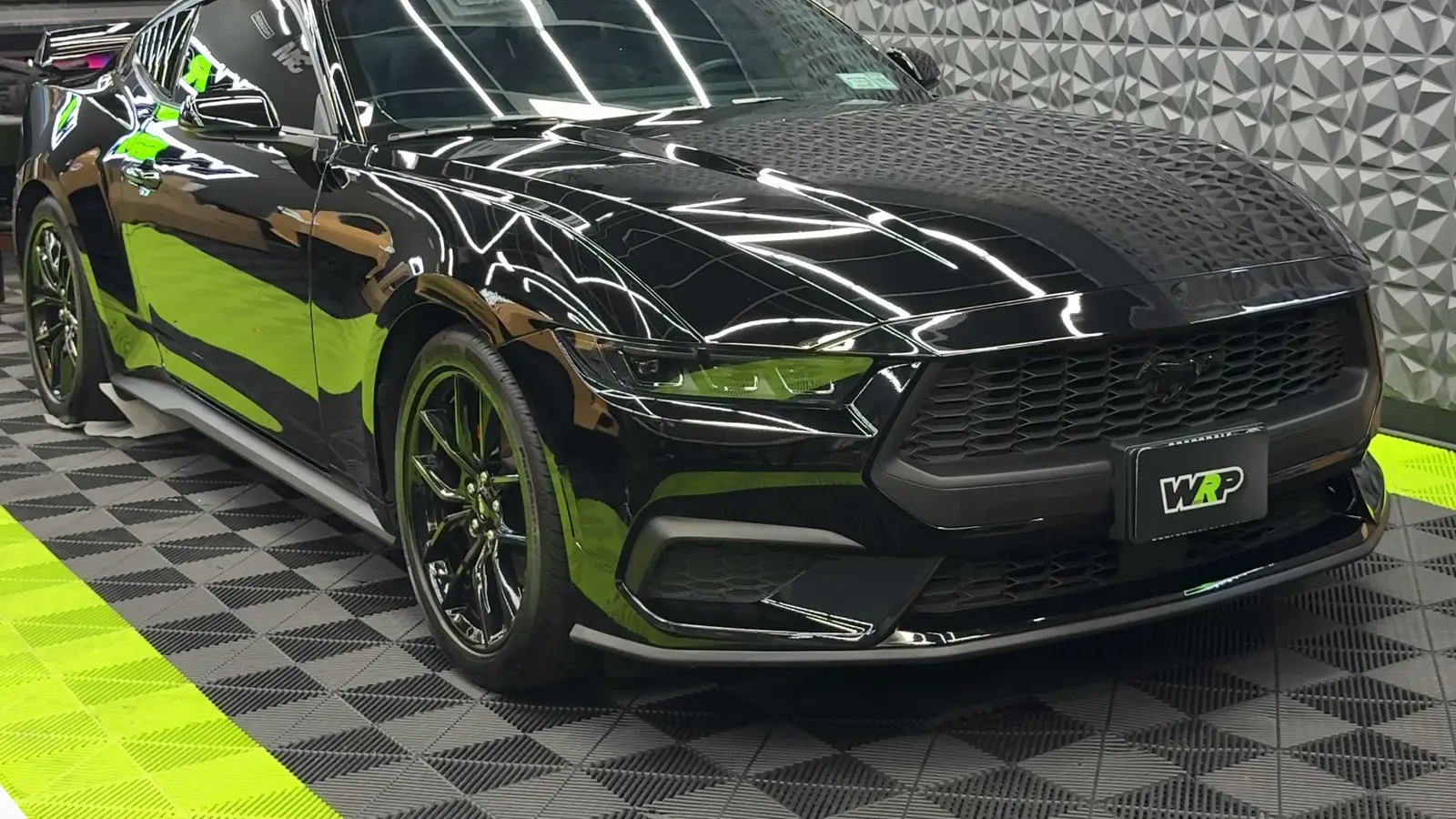
A coating amplifies whatever is under it.
Coat swirled paint and you've preserved the swirls in glass. That's why every WRP ceramic job starts with assessment and paint correction to the level your finish needs — then the coating locks in perfection instead of flaws.
Explore Paint CorrectionCeramic Questions
How long does a ceramic coating last?
Professional-grade coatings last 3-7 years depending on the product tier, how the car is washed, and whether it lives outside. Hand washing or touchless, prompt removal of bird droppings, and an occasional maintenance detail keep a coating at the top of that range.
Does ceramic coating prevent rock chips or scratches?
No - a coating is microns thick and cannot absorb impact. It resists chemical etching, UV, and light wash marring, and makes the car dramatically easier to clean. For rock chips you want PPF; the two products solve different problems and stack beautifully.
Why does the paint need correction before coating?
A coating locks in whatever finish is underneath - including swirls. Coating uncorrected paint is sealing flaws under glass. That's why every ceramic job at WRP starts with paint assessment and the appropriate level of correction first.
What's the difference between the 3, 5, and 10-year coatings?
Layer count, film density, and the specific Gtechniq or Gyeon system used. More layers cure into a thicker, more durable glass film - the 10-year flagship systems carry the most material and the strongest warranties, while the 3-year tier suits leases and shorter ownership. All tiers get the same correction-first prep.
Can you ceramic coat a matte wrap or matte paint?
Yes - with dedicated matte coatings from Gtechniq and Gyeon that protect without adding gloss. Matte finishes can never be polished, so coating them is arguably more important than coating gloss: it is the only line of defense their finish gets.
Why Gtechniq and Gyeon specifically?
Both are chemistry-first companies with professional-only lines, real durability data, and dedicated systems for gloss, matte, PPF, wheels, and glass - which lets us match the coating to the surface instead of using one bottle for everything.
Can you coat over PPF or a wrap?
Yes - coating over PPF adds hydrophobics and stain resistance to the film, and coating over vinyl helps satin and gloss wraps shed grime. It's the standard premium stack: film for impact zones, ceramic over everything.