The Tri-State Vehicle Wrap Guide: What NYC Driving Actually Demands From a Wrap
A vehicle wrap in Phoenix fights the sun. A wrap in New York fights everything: freeze-thaw winters, road salt, street parking, taxi-lane door openings, parking garages built for 1970s sedans, and the occasional soft-touch car wash that isn't soft. Wrapping a car for the tri-state means specifying for this environment — here's what that looks like.
What the Tri-State Climate Does to Vinyl
Freeze-thaw cycling is the silent test. Vinyl expands and contracts with temperature; a January week can swing 40 degrees. Cheap calendered films fatigue and crack at the stress points — premium cast vinyl (3M, Avery Dennison, KPMF) is engineered to cycle without failing, which is why film choice isn't a place to save money here.
Salt and brine attack edges. Where a dry-climate wrap can get away with lazy edge work, a New York wrap can't: unsealed edges wick salty slush under the film all winter. Wrapped edges, post-heating in recesses, and disciplined trimming are what make a wrap winter-proof.
Sun still matters. Summer rooftop parking bakes horizontal panels. Laminated films with UV inhibitors keep gloss and color from chalking out by year three.
Street Parking: The Honest Conversation
If your car lives on the street in the boroughs, your wrap will live a harder life — mirror clips from passing trucks, bumper kisses from parallel parkers, door edges in tight spots. Two ways to spec for it:
- Choose forgiving finishes. Gloss shows scuffs most; satin and matte hide minor abuse better and photograph beautifully in city light.
- Layer protection where it gets hit. PPF on the front end under or instead of wrap on impact zones, and consider color PPF - wrap looks with armor thickness - for the most exposed panels.
And a repairability note that surprises people: a damaged wrap panel can be reprinted and replaced individually — cheaper and faster than blending paint. For street-parked cars, that's a genuine advantage over paint.
Choosing Colors for New York
City light is its own design constraint. Deep gloss colors look spectacular for the three days between hand washes; satins stay presentable on a street-parking schedule. High-contrast wraps read better in canyon shadows between buildings. And if the goal is being found — commercial work — remember the vehicle competes with the loudest visual environment in America. Bold beats subtle; readable beats clever. (More on that in why commercial wraps matter.)
Rules of the Road: NY, NJ, CT
- Color changes are legal in all three states - but tell your insurer, and update the color at registration where required.
- Commercial vehicles must keep USDOT numbers and business names visible and compliant through any wrap - we spec DOT lettering into the design, not around it.
- Window films are regulated separately - see NY's VLT limits before pairing a wrap with tint (our tint page covers the legal shades).
How to Choose a Wrap Shop in the Tri-State
The install decides more than the film. What to actually check:
- An indoor, climate-controlled install bay. Vinyl has a working temperature; a January install in a cold garage fails by March.
- Real photos of local work - cars you could see on the street, not stock images. (Ours are in the gallery, hex lights and all.)
- Edge and recess technique - ask how they handle door jambs, handles, and post-heating. The answer tells you if the wrap survives winter one.
- Material transparency - a shop should tell you exactly which film line you're buying and show the warranty.
- Prep discipline - contamination under vinyl telegraphs through. The process should start with decontamination, every time.
Where We Fit
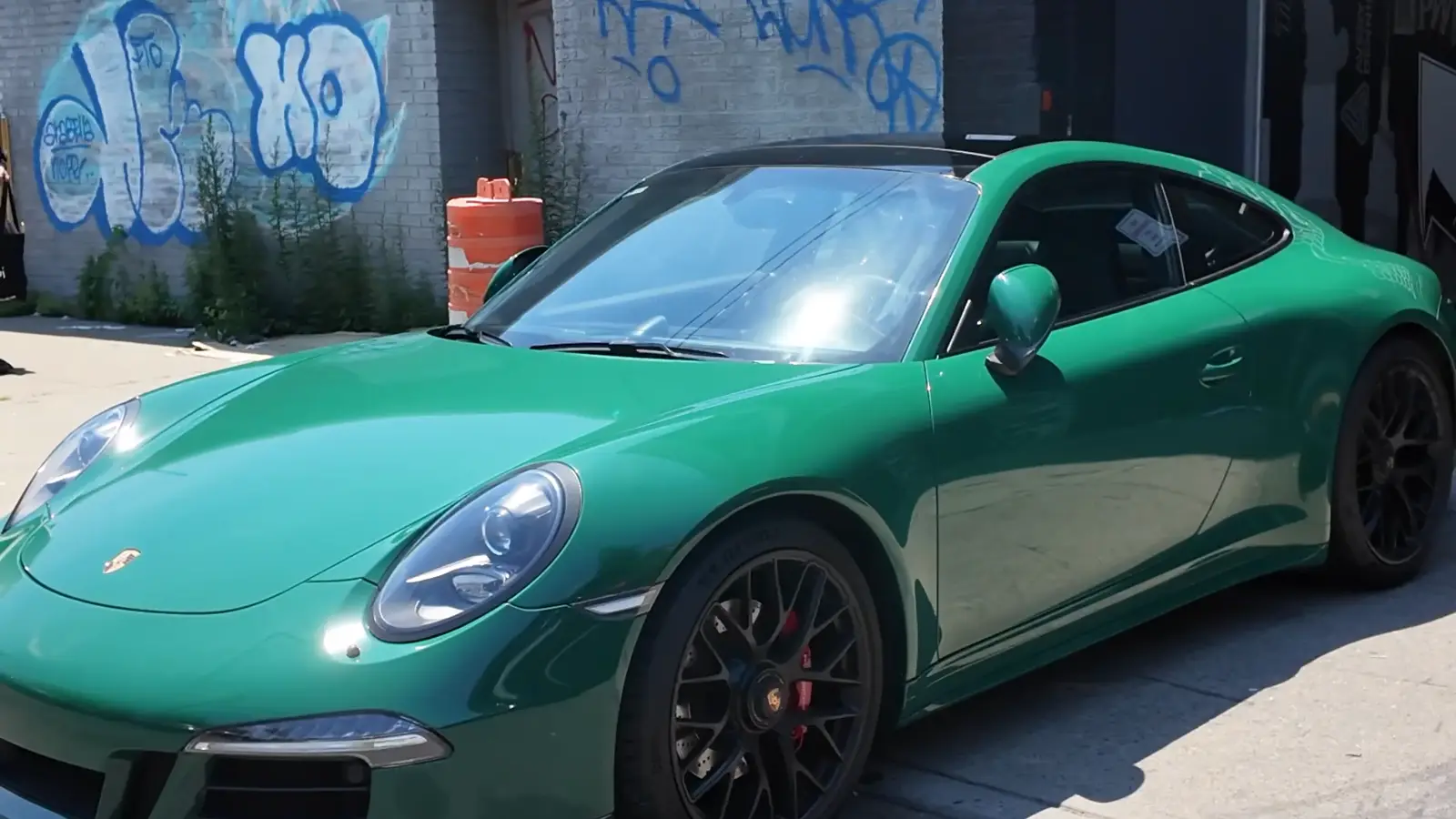
WRP wraps the whole tri-state from one Bronx facility at 1489 Blondell Ave — 15 minutes from Yonkers and New Rochelle, 25 from Great Neck, straight over the GWB from North Jersey, and central to all five boroughs. Design, print, and installation happen in-house under the hex lights, in a climate-controlled bay, on premium films specced for exactly the conditions this region throws at a vehicle. Check your area on our service pages, or come see the shop — the green 911 out front is hard to miss.
Frequently Asked Questions
How long does a wrap last on a NYC street-parked car?
Street parking is the hardest duty a wrap faces - expect the lower end of the 5-7 year range for premium cast vinyl, with edges and horizontal panels aging first. Garage-kept tri-state cars routinely see 7+ years.
Do wraps survive NYC winters and road salt?
Quality laminated cast vinyl handles freeze-thaw cycles and salt well - often better than unprotected paint, since the film takes the abuse. The critical factor is installation: sealed edges and post-heated recesses are what keep winter from finding a way under the film.
Are colored wraps legal in New York?
Yes - color change wraps are legal in NY, NJ, and CT. You should notify your insurer of the color change, and commercial vehicles must keep required markings (USDOT lettering) visible and compliant.
Why choose a Bronx shop if I'm in Westchester or Long Island?
Geography: the Bronx sits at the center of the tri-state map. From Yonkers or New Rochelle it's 15 minutes; from Great Neck about 25; from North Jersey just over the GWB. One trip over a bridge buys NYC-level installation quality.